

There are many positive coping strategies that players can use. The best perspective is to have a ‘psychological first-aid kit’ with several strategies and exercises you can practice whenever you are undergoing a stressful time, or a bio-bubble itself. Some of them are listed out below
Maintaining strict routines:
Though routines themselves can become monotonous if followed to the dot all the time, they can still be steady anchors in choppy waters. Regular routines contribute to good sleep, general health and more awareness of your mental frame. You can try to follow your regular routine as much as you can, even though the environment has changed. If your bio-bubble demands a different routine, planning a new routine or schedule and following it regularly will also be useful. Putting your routine on paper, or a dashboard visually can also help look forward to the day and the next. This can also help you track your day-to-day activities.
Regular physical fitness:
As a cricketer, this is a big part of your regular life. But being in a bio-bubble can throw a spanner in your wheel. It might throw off your fitness regime not just because of technical difficulties but also because of mental ones. Your desired equipment might not be available or the space might not be sufficient to do all your workouts. For many athletes it can be a lack of motivation. We are usually socially motivated to push past our physical boundaries when we workout in a group setting. It might become difficult to motivate ourselves to push further in solitary confinement. Finding a virtual-workout buddy can be a good motivational tool in a bio-bubble. You can also try low intensity ‘fun’ workouts, just to kick-start your workout and get your endorphins pumping. Make your fitness workout a reward, rather than a punishment.
Get ready for the day:
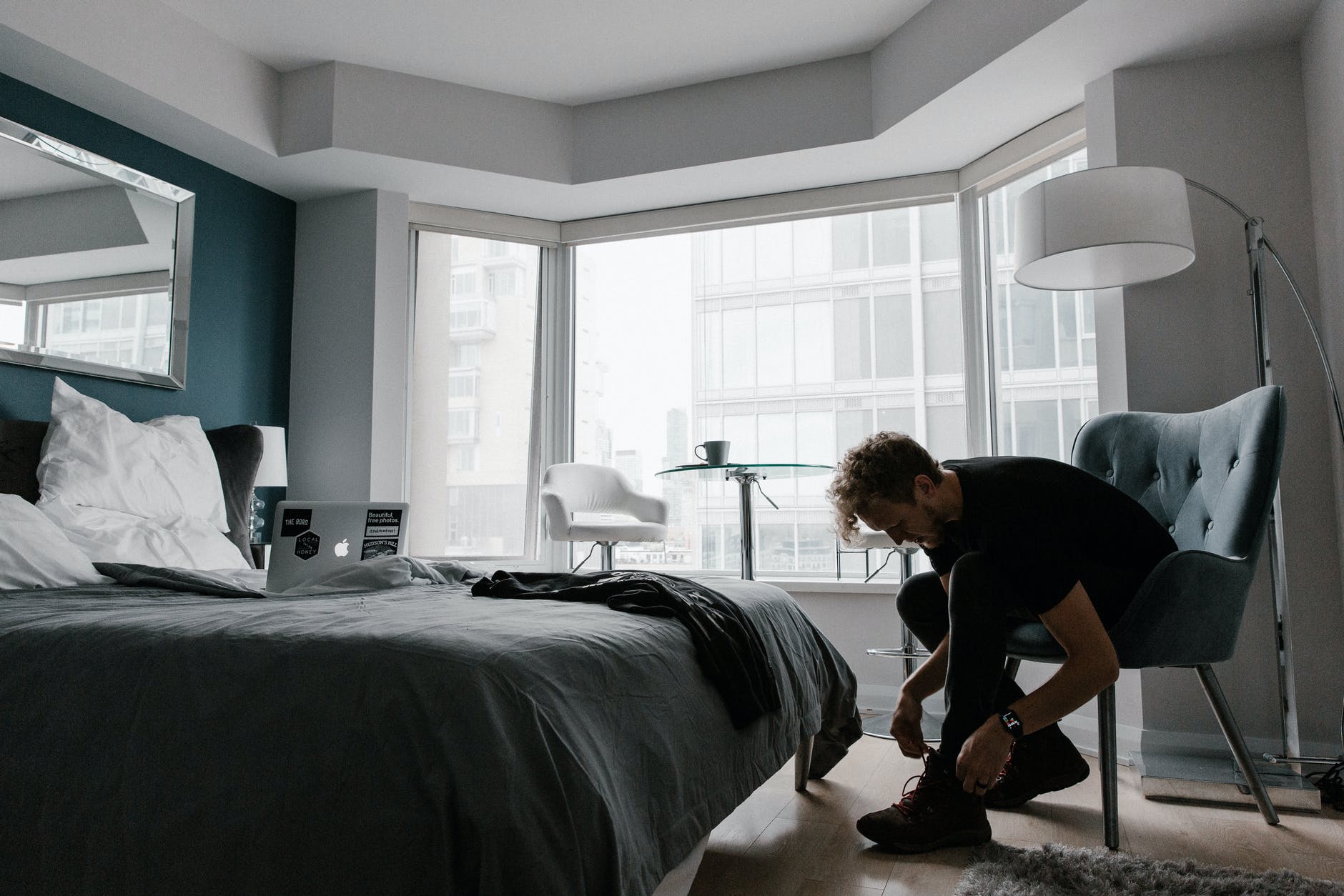
It is so easy for the day to slip away, especially when we are by ourselves and under the scrutiny of no one. In an isolated situation like the bio-bubble where motivation itself might be low, a question like, “What is the point of even getting up?” can cross our minds. An easy way to start your day on a good note is to get ready for the day, no matter what the occasion. Getting dressed with the right outfit, getting your hair-styled, putting your shoes on, all instantly put your mind in a let’s-do-this mood rather than a let’s-just-sleep state.
Awareness of unhealthy coping:
Humans are fighters and will find a way to get through almost any situation. But many of the coping mechanisms are not necessarily healthy. We call these maladaptive coping mechanisms. A typical example of maladaptive coping is consuming too much alcohol in response to a stressful situation. It can also be a seemingly harmless thing such as drowning in social media in order to avoid working on a technical flaw in your game. In a bio-bubble, unhealthy coping can easily become a problem because there is no one to call you out and also because you are on your own to solve it. As prevention is better than cure, it is important that you are more aware of how your mind works, how your thought patterns work and how they affect your game. This is where psychology becomes mandatory in sport because not everyone is skilled to know the thoughts you should let go and the thoughts you should hold on to. If you are working with a Sport Psychologist, ask them about positive coping strategies for you and your personality.
Bring some of home:
Any strange environment will affect our sleep cycles and regular routines. But sleep and comfort are essential to mental health, which in turn is essential for high performance. To make your hotel-life a little more comfortable, it is advisable to bring a little of home with you. It can be the blanket from your room, or the bedsheets from home. It can also be using fragrances that remind you of home in incenses, or air fresheners, or even mosquito-repellants. You can also carry some artifacts from your bedroom that bring ‘good-luck’ or even statuettes/idols that give you a sense of peace and security. Keep your hotel rooms neat and tidy with your clothes and accessories properly organized so that you are in control of your own space.
Auto-suggestions:
Positive auto-suggestions have been in use as a coping strategy ever since the start of the pandemic. Repeating positive verbalizations whenever a fearful or anxious thought come by, create a positive mind. This is quite effective as it retrains the mind to think in a certain way. This can be used not just for positivity, but also for focus and concentration among other performance factors.
Scheduling worry-time:
It is easy to get carried away by worries when we are by ourselves. It can happen with or without any latest news or information. Many times these worrying thoughts come back stronger, though we try to push them out. It’s because they hold so much weight and are quite legit. To ensure your worrying doesn’t get in the way of your training or performance, worry-time can be a simple strategy. It is basically fixing a certain time just for ‘worrying’ where you sit and go over your worries and your fears. You may also make a rule where you are only allowed to worry during this time. If worrying thoughts come anytime during the day, you push them out temporarily and deal with them only during this time.
Worry-time may seem negative and fearful on its own. But when it’s coupled with a distraction activity or an affirmation/positivity activity, it can be quite effective in putting a positive spin on things and again giving you more control over your mood. While you go through your worries, and then analyze them and resolve them, you are winning little wars in the quietness of your hotel room.
Buddy system:
While solitude brings peace and comfort, it can also bring a lot of loneliness. Good company is a rare commodity and becomes rarer in a hotel full on isolating worried athletes. Ensuring that you are in contact with a good support system helps you fulfill your socializing needs, while also providing you with motivation, positivity and distraction. Make sure you interact with atleast five persons in a day. They don’t necessarily have to be your own team-mates; they can also be your family and friends or even your support staff. Leave shop-talk outside, and instead opt for themes of positivity and kindness.
Mindfulness & Gratitude exercises:
Mindfulness is a great tool and in essentiality is better performed in solitude. When better can you practice mindfulness, than in the seclusion of your hotel room? Mindfulness allows you to become aware of your thoughts and your feelings. It also gives you more control of what thoughts you want to keep and what you might want to push away. Practicing mindfulness everyday helps you focus on the process rather than the performance. While mindfulness and gratitude are activities that an athlete regularly take part in, their importance and use is greater in a situation like the bio-bubble. If you are having trouble practicing mindfulness, contact your Sport Psychologist or Mental Health Provider for assistance in this.
Cognitive games:
Prolonged isolation can lead to cognitive problems, even in healthy adults. While a bio-bubble situation is short-lived, it still can lead to troubles in focus and concentration. Being in a low-stimulation environment can also hamper creativity and learning. A good way to ensure to your mind is also training right in a bio-bubble is by playing different cognitive games. Though there are athlete-specific apps and sites like ‘NeuroTrainer’ or ‘Switchedontrainingapp’, simple games like Sudoku or Crosswords can also keep your mind engaged and improve your focus. Playing cognitive games can also be a social activity to indulge in during your daily conversations. Playing with a team-mate instills motivation, healthy competition and also teach you a lot about that person.
Use social media wisely:
Social media is a wonderful tool but the biggest problem is that it gives you a good share of positive and negative news, leaning mostly always towards the latter. On the outside, we are surrounded by people and different stimuli that can help us distract positively from negative media. But this is not the case with a situation like the bio-bubble. It might sound exaggerated, but one post with bad news can lead you into a negative or a downward spiral; a situation we cannot risk during a tournament. Of course we cannot switch off social media entirely. But we can filter the posts or pages we follow to ensure we only receive positive and uplifting news during the entire bio-bubble period. This applies to messaging apps as well – be in touch with people who bring value to your mind and health.
Visualization, Visualization, Visualization:
Visualization is a key tool for any professional athlete. The simplicity and versatility of visualization make it easy to practice anywhere and everywhere. While we might not have access to our desired surroundings or resources, we can easily bring them to us through visualization. You also have the ability to control and tweak it for your particular needs. Want to shadow practice at your own academy rather than your hotel room? Visualize it. Want to relax on a calm beach? Visualize it. Want to have a practice game with an opponent? Visualize it. Visualization can be used for a variety of things, from increasing focus & concentration, to improving technique, to relaxing your mind, to bring in positivity and push out negativity, to preparing for an entire match. Make visualization an active part of your workout regime.

Take an art tour:
It might sound absolutely ridiculous, but yes, take an art tour. There are many museums such as the British Museum, the Vatican Museum and the Metropolitan Museum of Art, all offer virtual tours of their exhibits. Viewing art does not just affect your mood, but can improve your cognitive abilities, which are crucial for your performance. Viewing art makes your brain work in newer ways, as you try to understand the piece and the patterns. This applies for creating art as well.
Finally:
- Remember that is just temporary and short-lived
- Be aware of your emotions, and try not to judge them. Let them just pass. The more we judge them, we more we worry unnecessarily.
- Also remember the fact that you are just physically isolated, not emotionally and definitely not spiritually!



 MindYourWicket
Leave a comment