
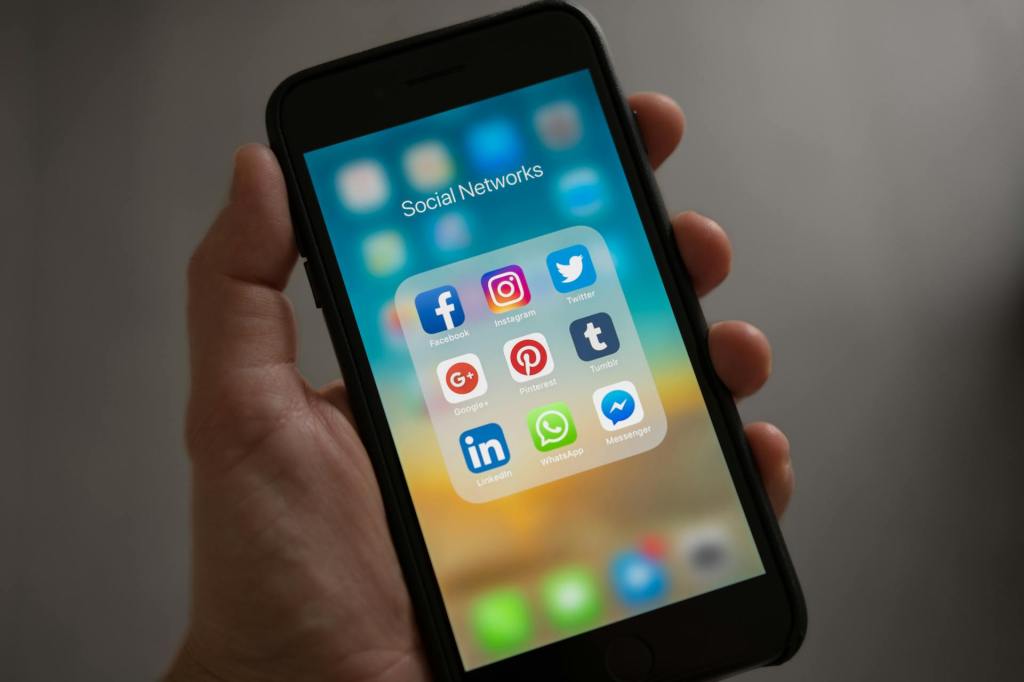
Social media is simply unavoidable today, even if you try your best to stay off social media platforms. Now, don’t get me wrong. Social media has plenty of uses. I know many clients who actually follow helpful social media handles to help them with motivation and even with mental health exercises. Still, social media can also become a stumbling block to success if not used in the right way.
If you are an athlete who’s trying to make it big, it becomes important for you to learn to manage social media pressure early on in your career. In this blogpost, I will be listing out a few ways through which you can handle social media pressure. Even if you are not a professional athlete, you can use these hacks to improve your mental health.
Pros And Cons Of Social Media For Athletes
Before I get to the part you’re really here for, let’s have a quick look at some of the actual pros and cons of social media, especially for athletes. While social media can definitely add plenty of pressure to your life, it can also bring a number of advantages.
Pros:
- Entertainment and distraction, especially through light-hearted content
- Increasing your visibility online and perhaps getting sponsorship deals and potential collaborations
- Building a community of your own online
- Being inspired and motivated by content from other athletes
- Learning and gaining knowledge from other sports professionals, like sports scientists, sports nutritionists and sports psychologists
- Advocating for causes that are close to your heart
Cons:
- Distraction from your training which can lead to a waste of time
- Constantly comparing your life, your daily lifestyle and career to others’
- Receiving trolling and criticism
- Over analysis of performance
- Privacy invasion
- Pre-performance anxiety caused by negative comments
How To Manage Social Media Pressure As An Athlete?
Okay! Now let’s go to the juicy part. If social media can bring plenty of pressure to you as an athlete, how can you handle this, especially in a world where social media is particularly hard to avoid or ignore. Let me list out a few hacks that you can easily follow. If you have any queries about these tips, please shoot away an email to mindyourwicket@gmail.com.
- Filter your feed the right way
- Remember that social media does not define you
- Manage your screen time wisely
- Say ‘no’ to doom-scrolling
- ‘Distract’ yourself wisely
- Engage with your followers in a limited manner
- Practice smart use of social media in your pre-game routine
- And your post-game routine
- Recognize the signs of burnout
- Talk to a sport psychologist
- Filter your feed the right way
Social media is an algorithm, and it simply picks up cues from your past history, your demographic data and your ‘likes’ and ‘dislikes’ to bring you content. However, this algorithm never really cares about your mental health or your growth; it only wants your views.
While you may not be able to beat this algorithm fully, a smart thing that you can do is to simply filter your feed. Depending on the social media platform that you are using, go to the filter option and curate your feed by either selecting the types of posts that you want to see, or use options to hide posts of a certain nature.
- Remember that social media does not define you
Ask those who literally live off on social media and they will tell you that they would give away their kidneys for a million ‘likes’ or views. In fact, many research studies like this one, have shown that increased usage of social media can actually ruin your self-esteem and self-concept because of constant comparisons with others.

You need to strongly remind yourself that social media does not define you as a person, or even as an athlete. This means that even if you become an overnight celebrity on social media for any particular reason, you need to still be grounded in who you are as a person, what your values and principles are, and what your real aim in life is. It also means that even if the entire population of social media gangs up on you to vilify you or troll you, your self-esteem should not waver. This is definitely a little difficult to practice, and I can understand why many choose to simply avoid social media like the plague.
- Manage your screen time wisely
One way to manage your screen time as an athlete is to simply create ‘no-phone zones’. For example, your training place can be a no-phone zone, which means that you simply do not use your phone in this time. You can also make meal-time or family time a ‘no-phone zone’.
I always advise my clients to follow ‘no-phone days’ which means that you do not use your device for an entire day. You can use this entire day for resting and recharging yourself. If you have not tried this so far, I would advise you to do so. You will definitely love it.
- Say ‘no’ to doom-scrolling
According to Merriam-Webster, the act of ‘doom-scrolling’ is to spend excessive time online scrolling through news or other content that makes one feel sad, anxious, angry, etc. Believe it or not, there are very few pages and handles on social media that are intended to make you feel positively. Most of the content on social media are either plan trash, useless or intended to make you negatively, even if they have an original positive intention.
This is because negative emotions are actually stronger than positive ones. This means that a video clip or a reel that can bring out negative feelings like anger, frustration, greed or jealousy, may force you to take more actions than positive ones. Content creators know this well, and make use of it liberally. However, the more you doom-scroll, the more negative you will end up feeling.
Before picking up your phone to scroll on social media, or even simply window-shop, ask yourself why are you are using your device in the first place. You can also ask yourself this question if you catch yourself right in the middle of doom-scrolling. In this way, you will always use your device with intent.
- ‘Distract’ yourself wisely
Using social media can be a great distraction when you’re feeling frustrated or if you’re feeling bored, like when you are waiting for your friend to show up. At the same time, if you keep leaning on this distraction, it can become a crutch that you tend to use always. So, try to distract yourself wisely when you’re using social media.
A key point to remember when you are trying to distract yourself in a better manner to be ‘active’, and not ‘passive’. In terms of social media, this means communicating with your friends or loved ones through social media, or watching videos with the full intent of learning something new. You can also try to do something else active outside of social media, like doing something with low-intensity like a casual game, listening to music, learning a dance routine or even playing outside with your pet.
- Engage with your followers in a limited manner
If you are quite active on social media and like to interact with your followers, remember to maintain a limit. Otherwise, this can not only distract you, but also lead to unwanted pressure. One way to do this is to simply dedicate a time in a day when you would check and respond to your messages.
If you have a large following and are keen on maintaining a social media presence, while also giving importance to your training, you can also think about hiring a team or a manager to check your messages and filter those which will be worth your time. Having fans is certainly great for any athlete, but you need to know how to protect your sports performance from fans and followers. Check this post out for more tips on this subject.
- Practice smart use of social media in your pre-game routine
I always advise my clients to never use social media before a game, any game. It is not only the negative comments that can get you, but even the positive ones. However, I can also understand that sometimes you might need to use social media frequently, and even before a game. In case you are one of those who need to do so, this tip is for you.
Simply, post something with intent very quickly, log off very quickly and keep your device away. Many top athletes do this when they feel the need to engage their followers, and also need to have their peace of mind before a game.
If your need to use social media is not engage with your followers, you can bookmark a few pages that may help you with your mental state. For example, following a visualization exercise, or even watching pages posting your previous performances can be helpful as a pre-game routine.
- And your post-game routine
Same thing goes for your post-game routine, especially if you are elite athlete, or someone who has plenty of followers. Try to post about your game very briefly and keep a period for cool-down. I would suggest a couple of hours.
If you need to engage with your followers, try to do so only with those who are being positive about you. Getting involved in long rants and criticism can not only affect your mind, it may also affect your career. Another thing to keep in mind here is to always, always, always put your team first.
- Recognize the signs of burnout
Too much of social media can also lead to burnout. However, this is rarely talked about, or else we would all be probably throwing away our phones in the trash. Not many realize that social media can bring about a burnout state, and also don’t recognize the signs of a burnout. Some signs that your social media is giving you a burnout are:
- Feeling emotionally drained after using social media
- Constantly checking your social media for notifications
- Comparing yourself to others online
- Struggling to complete daily tasks as a result of social media
- Obsessing over posting and engaging
- Experiencing eye strain, poor sleep or any other health changes
- Not enjoying social media anymore
- Talk to a sport psychologist
If social media is giving you a burnout, or if you have doubts about any of these points covered above, you can simply talk to a sport psychologist. You can also shoot me a mail at mindyourwicket@gmail.com A sport psychologist will not only help you handle social media pressure much better, but also help you become a better user of social media, while balancing your sports and your personal life as well.
Conclusion
In conclusion, you need to be in control of your social media, and not let social media necessarily control you. Boost your mental health, your emotional health and your self-esteem through things other than ‘likes’ and ‘comments’. Remember that your mindset is your greatest asset – protect it always. If you like this post or have any questions, send out an email to mindyourwicket@gmail.com.
References
https://www.sciencedirect.com/science/article/abs/pii/S0747563222004113
https://journals.sagepub.com/doi/10.1177/20563051241239282?icid=int.sj-full-text.similar-articles.4
https://pmc.ncbi.nlm.nih.gov/articles/PMC10476631/
https://www.pewresearch.org/internet/2015/01/15/psychological-stress-and-social-media-use-2/
https://www.nature.com/articles/s41598-024-77418-2




 MindYourWicket
Leave a comment