
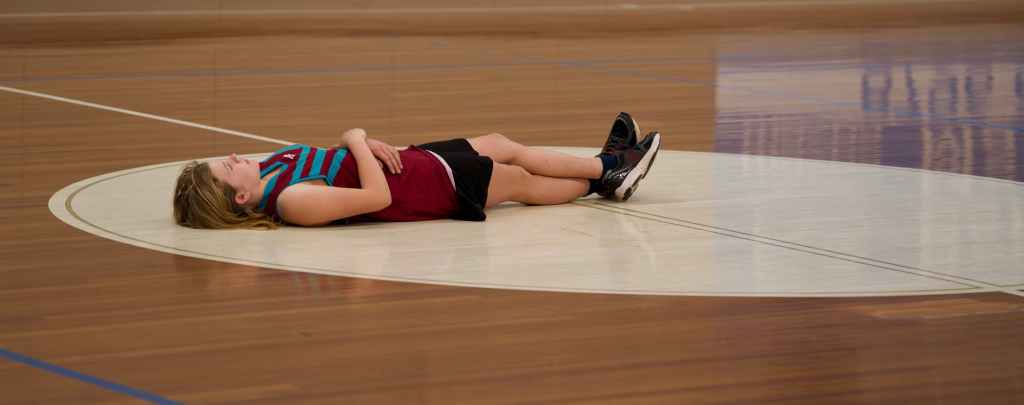
“I visualize a lot…It won’t happen every time, but 8 out of 10 times, it will end up happening because you are so convinced about” – Virat Kohli
Visualization is a common word in sports performance world. In fact, there does not go by a day wherein I don’t emphasize on this powerful tool for my clients. While there are so many resources on visualization for sports, including detailed videos and guides, there still seems to be quite a bit of a gap when it comes to learning it in theory, and applying the same on the field for practice.
In this info-packed blogpost, I am going to take you on a little journey. By the end, you will be able to visualize like a pro, especially if you are a sportsperson. Visualization is not just a nice skill to learn, but an essential skill every athlete needs to excel in. While polishing up your sports-skills and techniques, this is one such tool you need to be well-versed in if you are aiming for the big leagues.
How Visualization Works?
Visualization seems pretty easy in principle. Pick a scene or a topic, visualize it in your mind, and see the magic that follows. In reality, it is a whole lot different. It is moderately complex, but easy to pick up with the right practice. Before you visualize like a pro, it is important to understand how this technique actually works.
If you are averse to neuroscience, you can totally skip this part and move to the next. Still, you can stick around for a few nuggets of knowledge because this can help in optimizing your visualization. When you know how something works, you are bound to use it in all ways possible for your good.
In sports, visualization refers to mental images which are generated by the athlete. These images are generated in a series, and are related to their sport, or a certain aspect of the sport. The purpose of visualization can be multi-faceted, with some athletes using it purely for relaxation, and others using it to improve focus and concentration.
According to neuro-science, visualization works by strengthening ‘neural pathways.’ Neural pathways are basically networks of neurons in your brain and nervous system, which transmit information. Every function in your body is conducted through these neural pathways, including your sports performance.
So, when you are visualizing an action in your sport, the neural pathways which are responsible for the said action become active and stronger and stronger. Even if you are not physically performing the action in real-life, your mind says otherwise, all because of this wonderful technique.
Neuroscientists have also found that the effects of visualization are primarily because of ‘mirror neurons.’ Mirror neurons are brain cells which are activated when you perform an action and when you observe someone else performing the action. Obviously, mirror neurons are very important in the learning process.
While you visualize a certain action in your sport, for example, running up to bowl, these mirror neurons are activated. As a result, your brain believes that you are actually practicing it. This in turn improves your physical and mental coordination, making the action smoother and effortless in real-life.
Why Visualization Is a Must for an Athlete?
While visualization is a spectacular mental tool for anyone to use, it becomes indispensable for athletes. Give me the name of a top-performing athlete, and I bet you a million dollars that they use visualization as a part of their daily mental routine. If you are still not convinced, let me reveal the transformative benefits of visualization, which will make you an immediate fan of this strategy.
- Reduction in stress
- Better self-image
- Improved self-confidence
- Enhanced focus & concentration
- Efficient skill-learning
- Positive mindset
- Better emotional-regulation
- Better preparation for competitions
These are just the tip of the iceberg in terms of visualization benefits. When you start to regularly practice visualization in your daily lives, you will see many more advantages. As seen from the list above, visualization is not just about mindset-preparation, but can also be used for learning and training new skills.
Furthermore, a lesser known fact about visualization is that it is indispensable in rehab and recovery from injury. Thus, as people who are prone to frequent injuries, visualization is a skill which needs to be ever-present in your mental tool-box.
How to Visualize Like a Pro?
Now that you know the theory behind visualization and the vast number of benefits it brings to you, you are ready to actually visualize your way to success.
- Have a goal: It might seem simple enough to randomly imagine a series of images related to your sport. But, as everything else in sports performance, even visualization needs to be goal-specific.
Ask yourself questions like, “What am I visualizing for?”, or “What am I hoping to get out of this visualization exercise?”. If you are finding the process tricky, you can always shoot me a question at mindyourwicket@gmail.com.
When you are setting a goal for visualization, you need to remember to make this realistic and achievable. Since you are just starting out to visualize like a pro, it makes sense to set a short-term achievable goal. This will not only motivate you to visualize, but also helps you see the results of the technique first-hand in a better manner.
- Visualize the Process: The most common mistake that athletes often do when it comes to visualization, is that they tend to focus on the end-result. For example, a marathon runner might visualize what they might look like and what they might feel like, when they win the race.
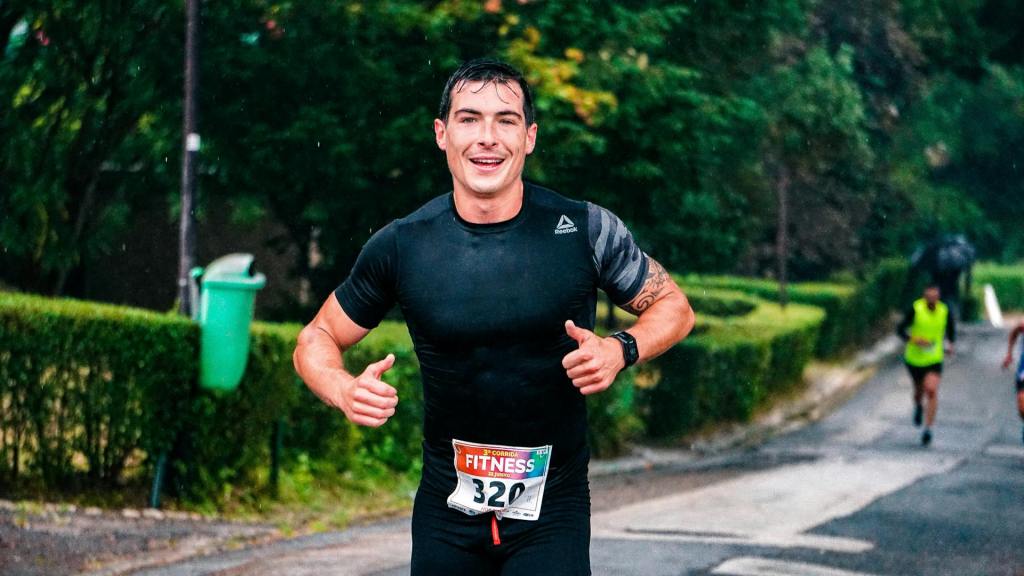
Visualizing the end-result is an integral part of the technique, but it is as important to visualize the process. If you are a badminton player, who is trying to improve their serve through visualization, you should not only be focusing on winning the rally. Instead, you need to visualize the entire process, right from your grip, to dropping the shuttlecock, to hitting it in the right position.
Remember to add intricate details to your visualization. This is another key point you will have to remember if you want to make your visualization highly effective. I would advise you to add even humorous or weird details that you might think are unworthy. I remember a client of mine who would think about chickens and their smell while visualization, since he often played in a ground which was near a poultry farm.
- Use Your Vision: Clearly there is no visualization without using your vision. While visualizing, you need to be able to imagine the various things you will be seeing, or ought to be seeing. Again, it is important to add details. So, think about colors, patterns, faces, textures, and anything else in between.
- Use Your Smell: Another important sense that you can use in your visualization is your sense of smell. While visualizing the situation, think about what smells you can encounter. Our sense of smell is a serious nostalgia-kicker. When you use this sense in your visualization, you are bound to bring up loads of memories and thoughts related to the situation.
- Use Your Hearing: Sports is never quiet, and you are sure to hear numerous things while playing. Incorporating things that you might hear during your process can also help in effective visualization. These can be what others might say about you, sounds of play in the field, or even what you might hear distantly.
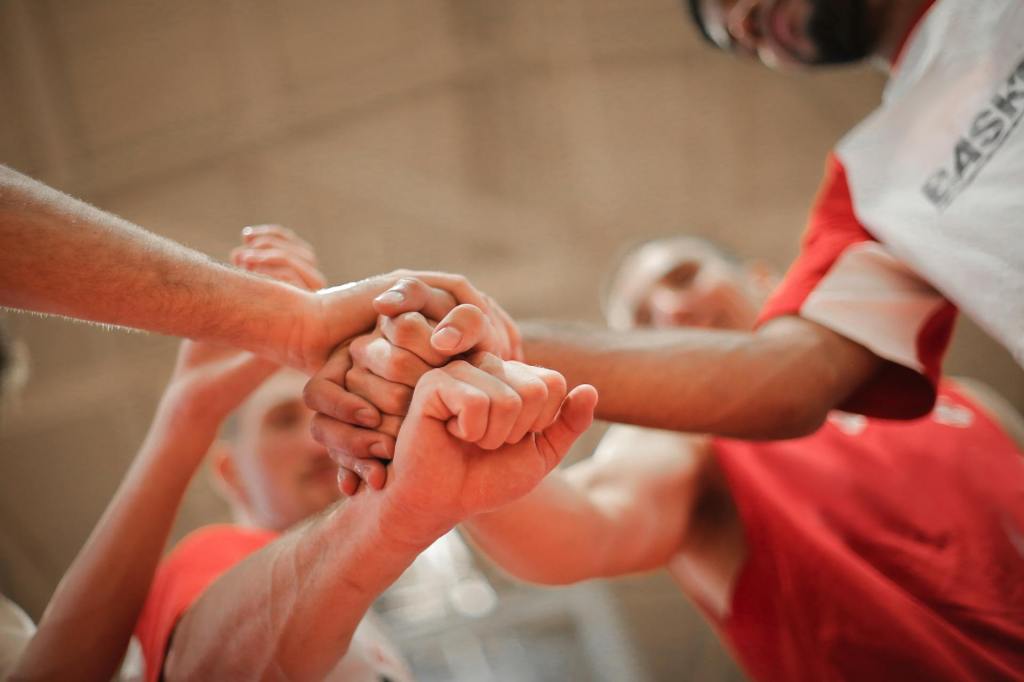
- Use Your Touch: Just like our sense of smell, our sense of touch is also responsible for initiating a wild rollercoaster of emotions and feelings. And keenly thinking about what your hands will be touching, and what your body will be touching during your process can be instrumental to your visualization. Examples are, a cricketer touching his bat, a basketball player touching his team-mates’ hands, a goal-keeper touching his gloves, etc.
- Use Your Taste: I often get confused looks from my clients in response to this prompt. But, taste is as important as the other senses for visualization. And believe me; you taste something or the other throughout the day, even if you are not fully aware of it.
If you are an athlete, perhaps the most common taste you might experience during play is an energy-drink flavor. If you are someone who stays away from energy drinks, your obvious taste might be from dry-mouth or cotton-mouth. If you are pushing your body a little too much physically, you might even have a metallic taste in your mouth.
- Use Your Actions: Just as you use your senses when you are visualizing, you also need to use appropriate actions. This is yet another factor that I see visualization-newbies skipping out on. When you bring kinesthetic aspects into the picture, your visualization becomes all the more effective.
Watch former ice hockey player, Michael Cammalleri practice visualization using his hockey stick in this video. You will not only see him moving his hockey stick as if he’s really playing, but also notice that he is improving the efficacy of his visualization by doing it in the playing environment.
- Get in Touch With Your Feelings: Your emotions play a big role in your mental performance. Think about a game where you played your best. Now, try replaying those feelings and emotions you were experiencing at that time. I am sure that those emotions were a lot more positive than the ones you would have experienced in a game where you did not play up to you potential.
- Check Your Body Language: Body language is way more important for your performance than most athletes realize. Sometimes, even if your mindset may be jittery, faking a strong body language can turn the tide for you.
During your visualization, become aware of the body language you usually demonstrate in the situation and simply make it better. While visualization is often done from a first-person point of view, for this aspect you can try seeing yourself from another person’s POV since it can give you additional insights.
- Prepare for the Worst: The beauty of visualization is its versatility. This power-packed tool can be used for anything related to your sports performance, and more. If you are using visualizing for improving a technique or learning an action, try preparing for the worst-case scenario. Think about things that can go wrong in your performance, and visualize yourself solving the problem and moving forward.
- Finish with some Deep Breaths: Visualization can take up quite a bit of your mental energy if done right. When you are done visualizing, you can end the process by simply taking a few deep breaths. Inhale through your nose, and exhale through your mouth with pursed lips. This can bring about a beautiful finish to an amazing visualization session.
Visualization Sample Guide: For Cricketers
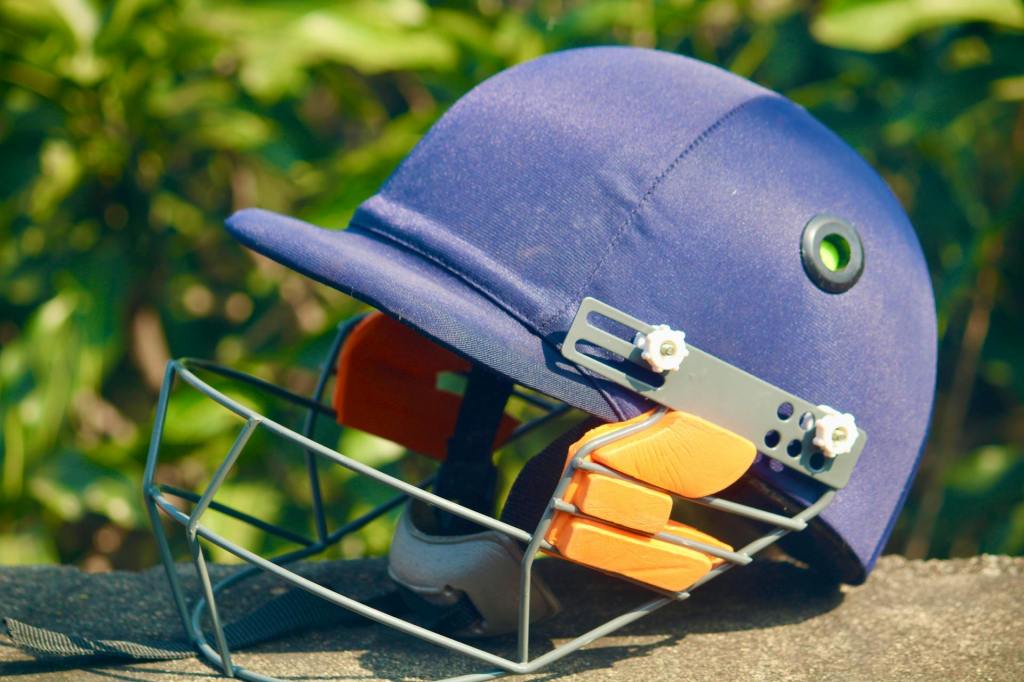
Visualization is quite simple, but can be slightly confusing for newbies. To make it easier for you to understand, I have created a visualization sample guide. As you all know, I am quite passionate about cricket, and so, I have chosen this as the focus sport for the sample guide. This visualization guide is for an opening batsman, who often gets nervous while facing the first ball.
- Visualization Goal: To face the first ball in a confident manner.
- Visualizing the Process: I am sitting in my whites in the hot sun. I hear my captain call my name, calling me to the crease. I pad up, taking time with my gloves. I see the other opener, and walk up to the crease. I look at the audience, my team-mates, my coach, and the sky. I look at the field-set, and the bowler. I take my stance at the crease, and tap my bat on the ground, ready to face the first ball.

- Using My Vision: I see the vast grassy ground. I see the blue sky, white fluffy clouds, and the hot blazing sun. I see the fielders standing around the pitch. I see the bowler who is getting ready to bowl to me. I see my partner, waiting at the non-striking end. I see the pitch, it looks dry and hard. I see my gloves gripping my bat and adjust it. I see if my shoes have been tied properly.
- Using My Smell: I smell the grass on the field. I smell my deodorant, freshly sprayed on. I smell the Red Bull drink I had on the way to the match. I smell the rubber of my gloves and the rubber of the grip of my bat. I smell the fresh morning air.
- Using My Hearing: I hear my captain shouting instructions to the fielders. I hear the murmuring of the crowd in the stands. I hear my coach speaking to others in the background. I hear my bat tapping on the ground. I hear the scrunch of my shoes on the pitch. I hear myself speak my motto, “This is my day, and this is my game!”
- Using My Touch: I touch my cricket gloves. I touch the handle of my bat, and feel the rubbery grip. I touch my pads, and make sure they are clasped well. I touch my partner, as I give him a fist-bump for good effort. I touch my jersey and feel the pride of being a cricketer.
- Using My Taste: I taste the Red Bull I had earlier. I taste my mouth going slightly dry, as my excitement builds. I start to taste the sweat running down from my face, since the sun is quite hot. I taste the lip-balm I had applied to prevent dryness.
- Using My Actions: I replicate the steps that I take before facing my first ball. I walk a few steps around the crease. I twist the bat handle in my hands a few times to get the angle right. I tap the bat on the ground, and draw a line for placement. I place my feet steadily in their positions on the ground. I make sure that my head and back, are in the right alignment.
- Getting in Touch With My Feelings: I feel excited and nervous to face the first ball. I am curious to observe my performance today, after months of dedicated practice. I am aware that this is a tough bowler to play against, but I am confident. My mind is steady, and I am ready to face any challenge in a classy and positive way.
- Checking My Body Language: My body language is strong and confident, no matter how tough the opponent might be. My posture is straight and I make eye-contact with everyone I speak to. I stand tall and walk with purposeful strides. My movements are controlled, and not fidgety. I look like a winner on the field.
- Preparing for the Worst: I know that not everything can go smoothly, and tough moments might come up in my match. But, I also know that I have prepared for every type of situation, and can easily face them.
(Here, you might want to list the various difficult situations that can happen in the first ball, like a delivery with unexpected pace, sledging, pressure from the captain, swing-friendly conditions or wrong shot selections. Once you listed these mentally, you can visualize positive responses that you can take to counter them in your game.)
- Finishing with Deep Breaths: I take deep breaths to finish my visualization. I inhale positivity, strength, focus and energy, and exhale negativity, fatigue and distractions. I inhale and exhale deeply and slowly, until my body is relaxed and my mind refreshed. I deeply breathe in giving gratitude to the universe for the many wonderful opportunities I am blessed with every day as an athlete and as a cricketer.
Conclusion
If you feel that there is something lacking in your training as an athlete, visualization is the missing piece of the puzzle. While it definitely sounds simple enough, it takes time and regular practice to perfect this technique. Once you do, your performance will never be the same again. It will only keep getting better. If you have any questions or doubts, please ask away at mindyourwicket@gmail.com.
References
https://www.sciencedirect.com/science/article/pii/S0928425715000066
https://link.springer.com/chapter/10.1007/978-3-030-03801-4_36
https://www.ncbi.nlm.nih.gov/pmc/articles/PMC5351796/
https://www.verywellfit.com/visualization-techniques-for-athletes-3119438
https://www.peaksports.com/sports-psychology-blog/sports-visualization-athletes/




 MindYourWicket
Leave a reply to cricketpsyche Cancel reply