
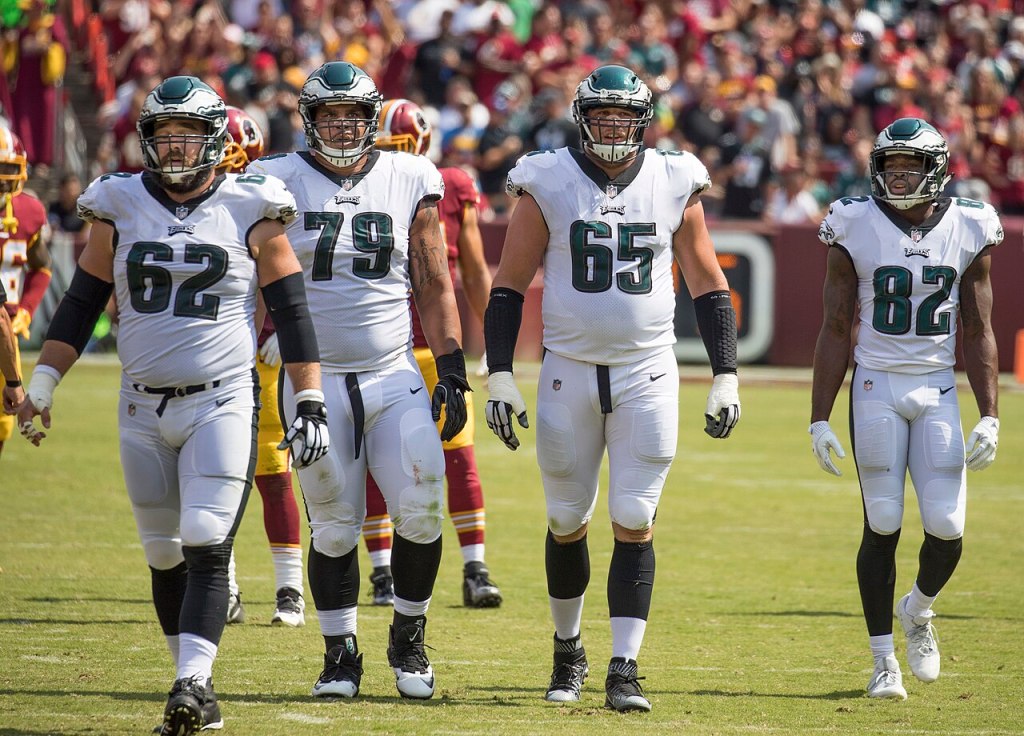
Lane Johnson announcing his decision to retire from the NFL at this point in the season surely makes no sense. The right tackle was originally expected to hang up his cleats only after the current football year came to an end but it looks like the player is struggling with some issues at home and in his personal life which made him decide to retire now.
Johnson, in his statement, admitted that he felt the need to focus on his mental health and his family. We do not know what the guy is struggling with, and personally, I love it when any athlete speaks openly about their mental health struggles. Although Johnson did not explain what issues he’s dealing with, his willingness to even mention his mental health is truly commendable.
While most football fans are still reeling from Johnson’s announcement and what to make of it, Stephen A. Smith decided to do something truly disgusting. Instead of empathizing with Johnson and congratulating the veteran for a fabulous career, SAS went on to mock the tackle for his mental health issues.
“He went like this, ‘You know what? I’m gonna call it quits.’ Now, he calls it quits. Not before the season. Not in the offseason. Oh, no, no, no, no! After being subjected to this he said, ‘Life is a little bit too short. I need to focus’ – what did he say? His mental health? Am I making it up?” Stephen A. Smith said.
Smith’s take was clearly in the wrong about Lane Johnson. And what worries me more is that Stephen A. Smith was strongly considering running for President, until a little while ago. If a potential leader of the nation and an influential figure like Smith cannot accept an athlete’s mental health struggles, then there’s no hope for anyone else to empathize.
Lane Johnson’s Retirement For Mental Health Is Nothing New In Sports
Lane Johnson making such a difficult decision to retire from the game in the middle of a season for mental health is nothing new. There have been many instances when athletes have stopped playing altogether, or taken long and indefinite breaks to protect their mental health.
Once upon a time, mental health struggles were seen as weakness. But now, with athletes speaking more and more about the pain and challenges that come with their professions, regular people are able to easily empathize when players make decisions to not play anymore as a result of stress.
Two examples I would highlight here are Simone Biles and Michael Phelps. Biles stepped back from the mat after winning Olympic golds in succession. Phelps spoke up about his mental health struggles only after his retirement and has gone on to become a mental health advocate.
Related Reading:






Leave a comment